


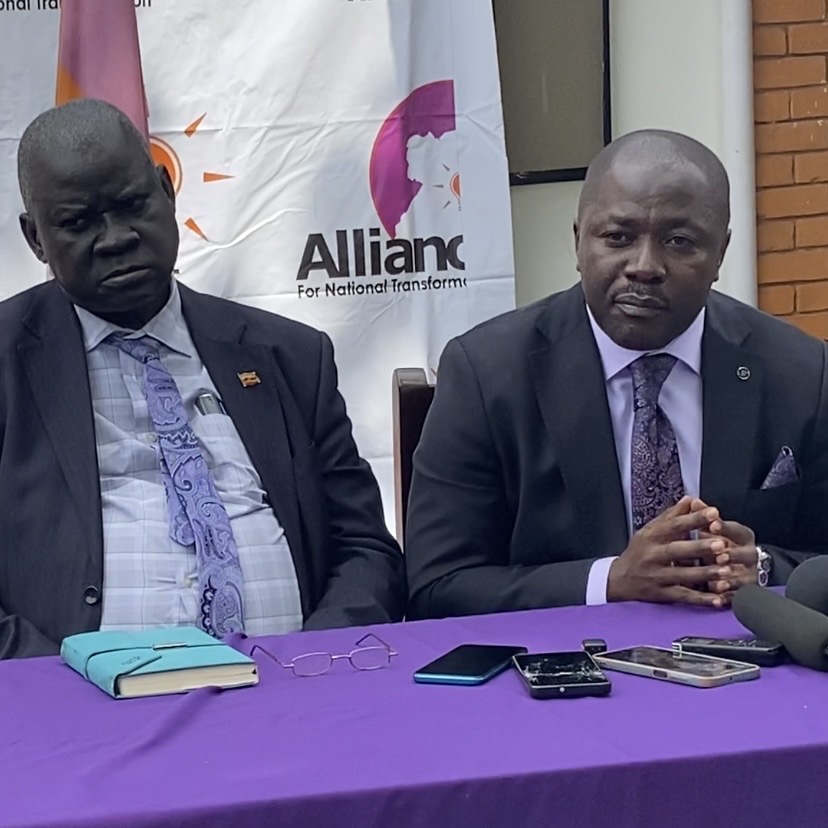

Wadri takes over as National Coordinator, Ismail Kasule joins top leadership as party challenges government over rule of law and political repression.
KAMPALA — The Alliance for National Transformation (ANT) has ushered in a new chapter of its political journey with the unveiling of a new leadership team, as the opposition party seeks to strengthen its structures and sharpen its voice on Uganda’s political future.
The leadership changes, announced yesterday at the party’s new offices in Lungujja, Lubaga Division, saw veteran opposition politician Hon. Casiano Wadri, former MP for Arua Municipality, take over as National Coordinator from retired Gen. Gregory Mugisha Muntu.
Hon. Kasule Ismail, MP for Hoima West, has also assumed a new leadership responsibility, replacing Hon. Gerald Karuhanga, former MP for Ntungamo Municipality, who contested the most recent election as an independent candidate.
But beyond the changes in personnel, the event offered a revealing glimpse into the political direction ANT intends to take, with outgoing National Coordinator Gen. Muntu delivering a strong warning over what he described as the growing erosion of the rule of law, while his successor Wadri turned the spotlight on the internal dynamics of Uganda’s opposition and the country’s political history.
Muntu: Uganda Cannot Afford Another Cycle of Political Repression
In what could be interpreted as a warning to the government ahead of the country’s next political chapter, Gen. Muntu cautioned the ruling establishment against what he described as the increasing use of state security institutions to intimidate citizens and suppress political dissent.
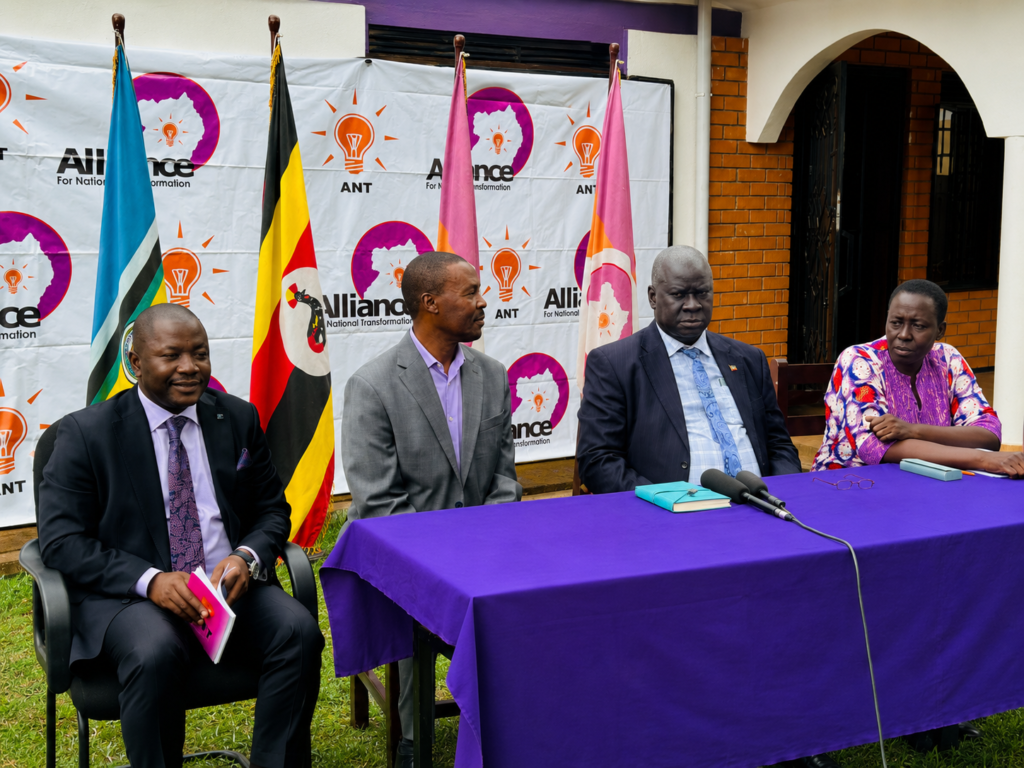
Muntu argued that Uganda was once again witnessing a dangerous weakening of the rule of law, pointing to several high-profile cases involving opposition politicians and activists.
He cited the continued detention of opposition figure Dr. Kizza Besigye, whose prolonged stay on remand has become a major point of contention among government critics and human rights advocates.
Muntu also raised concerns over the treatment of Erias Lukwago, the former Lord Mayor of Kampala and one of Besigye’s lawyers, whose arrest and continued detention have generated significant public debate, particularly amid concerns about his reported health condition and the denial of bail.
The ANT leader further referred to the case involving Hon. Muwanga Kivumbi, presenting the developments as part of a broader concern about the country’s political and legal environment.
Muntu’s message was unequivocal: the government must step back from what he described as a reliance on security agencies to instill fear in the population as a strategy for retaining political power.
He reminded the authorities that Uganda has travelled this road before—and history, he argued, has not been kind to those who abuse state power.
For Muntu, the lesson from Uganda’s turbulent political past is that no government can permanently secure its future through fear, repression or the excessive deployment of security institutions.
His warning raises a fundamental question at the heart of Uganda’s political debate: Can a government maintain legitimacy when citizens increasingly perceive state institutions as instruments of political control rather than guardians of the law?
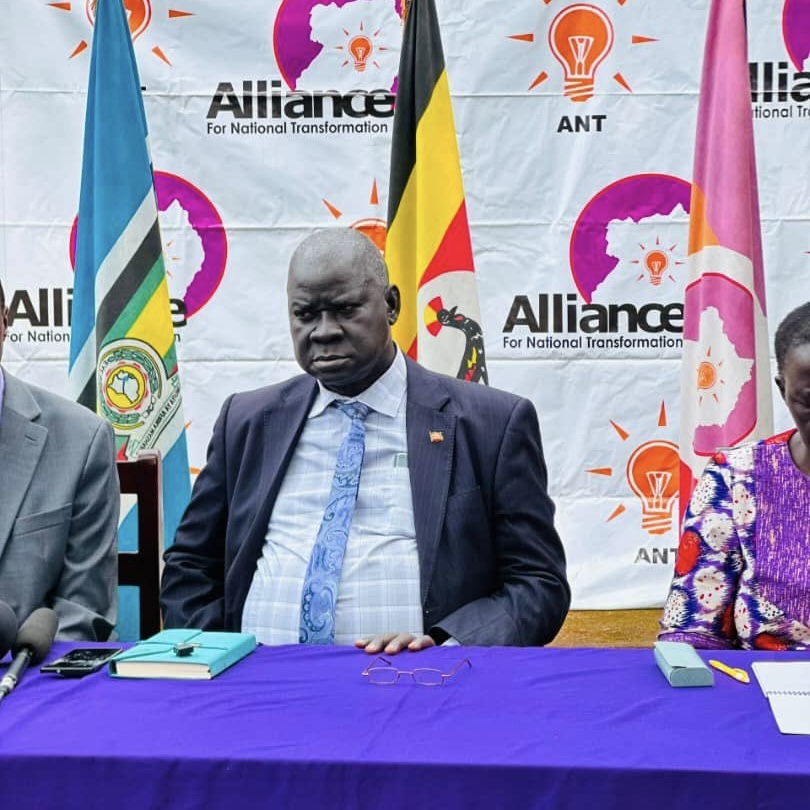
Wadri Takes Aim at Parliamentary Opposition
As he assumed the role of National Coordinator, Hon. Casiano Wadri wasted little time in signalling that the new ANT leadership intends to engage directly with the broader national political conversation.
Wadri criticised a motion attributed to Denis Namara, seeking to change the process through which the Leader of the Opposition in Parliament is selected, with a proposal for the position to be elected by all Members of Parliament.
Wadri advised Namara to abandon the proposal, arguing that the leadership of the parliamentary opposition should be determined in a manner that preserves the independence and political identity of opposition forces.
The debate comes at a time when questions surrounding the strength and independence of Uganda’s opposition remain at the centre of national politics.
With opposition parties facing internal divisions, competing political strategies and pressure from the ruling establishment, the question of who speaks for the opposition—and who has the authority to choose that voice—has become increasingly significant.
Wadri Reopens the Moses Ali Chapter
In one of the most striking moments of the press conference, Wadri turned to Uganda’s political history, paying tribute to the late Gen. Moses Ali while making claims about the events surrounding the armed struggle that brought the NRM to power.
Wadri claimed that Moses Ali played a critical role in connecting Museveni’s forces to the late Libyan leader Muammar Gaddafi, whom he said provided military support and weapons to the forces fighting against the government at the time.
According to Wadri’s account, the armed struggle was conducted on two fronts, with Moses Ali operating from West Nile and Museveni’s forces advancing from southwestern Uganda.
Wadri further claimed that there was an understanding between the two men that whoever reached Kampala first would become President, while the other would serve as Vice President.
He alleged that the agreement was ultimately not honoured and claimed that Moses Ali was subsequently imprisoned for two years.
The historical claims made by Wadri are likely to generate debate, particularly because they touch on one of the most politically sensitive periods in Uganda’s modern history.
They also raise broader questions about the alliances, promises and political bargains that shaped the country’s transition of power—and whether some of those understandings were ever formally documented or honoured.
Kasule: ANT Must Stand for Integrity
For Hon. Kasule Ismail, his appointment represents more than a change in position. It is an opportunity to reinforce the values upon which ANT was founded.
Accepting his new responsibility with humility, Kasule thanked the party for entrusting him with the opportunity to serve.
He described ANT as a party anchored in integrity, transparency and accountability, pledging to uphold those values in the execution of his duties.
Kasule also promised to maintain an open relationship with the media, saying journalists would have access to his office and that his door would remain open to them.
His message appeared to signal an attempt by the new leadership to strengthen ANT’s public communication and engagement at a time when political parties increasingly depend on media visibility to shape public opinion.
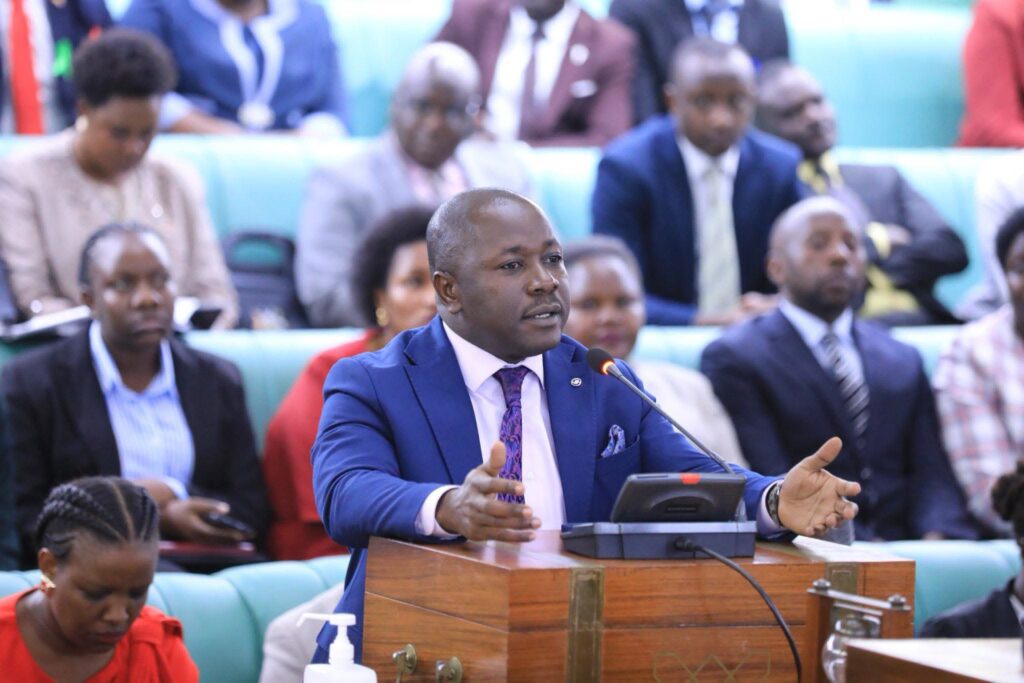
LC1 Elections: Kasule Warns Against the Politics of Money
The new ANT leader also turned his attention to the ongoing LC1 elections, raising concern over the amount of money being spent by candidates seeking positions that are largely voluntary and do not attract a regular salary.
Kasule questioned the logic of spending large sums of money to secure positions whose primary purpose is to serve local communities.
His concern points to a deeper challenge facing Uganda’s electoral politics: the increasing cost of political competition at every level.
From national elections to local leadership contests, the growing influence of money has raised concerns about whether public office is increasingly becoming an investment opportunity rather than a platform for service.
Kasule urged Ugandans to reject candidates who use money as their primary campaign tool and instead elect individuals who genuinely want to serve their communities.
His argument is that when voters sell their support to the highest bidder, the eventual cost is often transferred back to the community through poor governance, corruption and abuse of office.
A New ANT, But the Same Political Battlefield
The change of guard at ANT comes at a time when Uganda’s opposition is facing a defining moment.
The party now has a new National Coordinator in Casiano Wadri, a figure with considerable political experience, while Gen. Muntu’s continued presence within the political conversation ensures that the party’s emphasis on democratic governance and constitutionalism remains firmly on the agenda.
The new leadership inherits an opposition landscape marked by political fragmentation, legal battles, restrictions on political space and growing public debate over the role of state institutions in electoral politics.
Muntu’s warning about the rule of law, Wadri’s challenge to the proposed changes concerning the Leader of the Opposition, and Kasule’s criticism of money politics at the grassroots level all point to one central question:
What kind of political system does Uganda want to build—and what price is the country willing to pay if the principles of democracy, accountability and the rule of law continue to weaken?
For ANT, the change of guard is therefore more than an internal restructuring.
It is an attempt to reposition the party at a moment when Uganda’s political landscape is entering another critical phase.
Whether the new leadership can transform its message into a credible grassroots movement, however, will depend on its ability to move beyond rhetoric, build stronger structures and convince Ugandans that politics can still be about service rather than power, money and fear.
The guard has changed. The political battle, however, remains the same.