



Ezra Twino | August, 19 2026
KAMPALA — Uganda’s growing culture of youth innovation is facing an uncomfortable contradiction: the very entrepreneurs the country wants to nurture may also be producing food products that reach consumers before adequate safety checks have caught up.
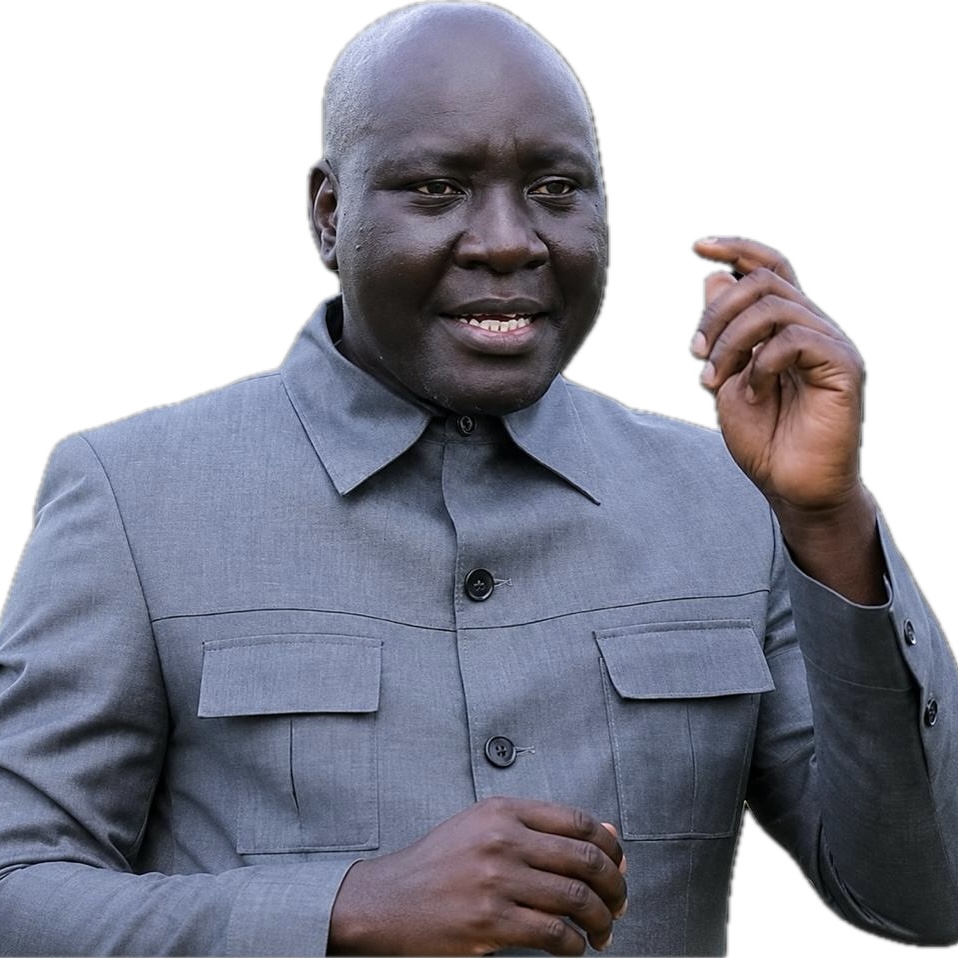
That concern came sharply into focus today when officials from the Uganda National Bureau of Standards (UNBS) appeared before Parliament’s Committee on Tourism, Trade and Industry, where Bugiri Municipality MP Hon. Francis Oketcho raised questions about standards, certification and the growing number of food products finding their way onto the Ugandan market.
At the centre of his concern was a particularly sensitive category — infant and complementary foods.
Walk through markets in Kampala, Gulu, Bugiri or other urban centres and it is increasingly common to find products marketed as “baby porridge,” “infant cereal” or “nutritious feeds.” Many are attractively packaged and promoted as healthy alternatives for young children.
But behind the colourful packaging lies a fundamental question:
Who has established that these products are safe for babies?
Hon. Oketcho put the concern bluntly.
“Young people are innovative with great ideas. But it seems UNBS is not catching up with the variety of products that are not certified.”
His argument is not that young Ugandans should stop innovating.
It is that innovation cannot be allowed to outrun public safety.
“We cannot allow the hustle of our youth to become a health hazard for our children,” Oketcho warned.
A booming informal food industry — and a regulatory gap
Uganda’s young entrepreneurs have responded to a genuine market need.
Imported infant and complementary foods can be expensive. Families with limited incomes naturally look for locally produced alternatives. Entrepreneurs have responded by milling millet, maize and soy, blending fruits and other ingredients and producing energy-dense porridges marketed specifically for children.
The ingenuity is commendable.
But infant food is not ordinary merchandise.
A product intended for a baby can have consequences far beyond the immediate purchase. Questions of hygiene, contamination, nutrient composition, allergens, aflatoxins, storage, packaging, labelling and shelf life become matters of public health.
And unlike an adult consumer, a baby cannot read a label, question an ingredient or report that something tastes wrong.
That makes regulation particularly important.
Certification must protect the child — without killing the entrepreneur
Oketcho’s intervention also raises another important question: Is Uganda’s certification system moving quickly enough to match the speed at which small businesses are emerging?
UNBS has an important mandate. The bureau’s role in testing, inspection, certification and market surveillance is central to protecting consumers and maintaining standards.
But for a young entrepreneur operating with limited capital, the journey from an idea to a fully compliant product can appear daunting.
The danger is that an overly expensive or slow system can push small businesses further into informality.
And that creates a vicious cycle.
The entrepreneur avoids certification because it is considered expensive or complicated. The product enters the market without adequate verification. Consumers buy it because it is cheaper. Regulators then have to chase products that are already circulating.
Everyone loses — except the regulatory gap.
The answer, therefore, cannot simply be a crackdown.
It must be a smarter regulatory system that makes compliance easier for genuine small businesses while making it increasingly difficult for dangerous products to remain on the shelves.
As Oketcho put it:
“We must create a system that protects the child without killing the business.”
That may be the most important message coming out of the parliamentary engagement.
The Q-Mark question
For consumers, one of the most visible indicators of compliance is the UNBS Q-Mark.
Where a product is required to meet applicable standards, consumers should be able to establish quickly whether it has undergone the necessary assessment.
Yet concerns about products without the Q-Mark raise questions about the effectiveness of market surveillance, particularly outside the major commercial centres.
If a product is being manufactured, packaged and sold specifically for infants, the public should not have to become food scientists to determine whether it is safe.
The regulator should already have done the hard work.
That is the entire point of regulation.
Babies are not the place to experiment
There is an important distinction between innovation and experimentation.
A young entrepreneur can experiment with a new clothing design, a mobile application or a furniture product.
But when the product is intended for an infant, experimentation must happen before the product reaches the child’s mouth — through laboratory testing, quality control, appropriate formulation and regulatory approval.
WHO recommends exclusive breastfeeding during the first six months of life and the introduction of safe, nutritionally adequate complementary foods from around six months while breastfeeding continues. (World Health Organization)
The first two years are particularly important. WHO’s guidance notes that inappropriate feeding during this period can contribute to growth problems and nutrient deficiencies, while early-life nutrition is also connected to longer-term health outcomes, including the risk of non-communicable diseases. (NCBI)
That makes the quality of complementary foods a national concern — not merely a private business matter.
The NCD warning deserves attention — but also evidence
Oketcho went further, linking poor-quality and uncertified foods to Uganda’s growing burden of non-communicable diseases.
His warning deserves serious attention, although the evidence must be handled carefully.
It would be misleading to suggest that uncertified infant food alone is responsible for Uganda’s diabetes, hypertension or cancer burden.
The relationship between nutrition and NCDs is far more complicated.
But there is no reason to dismiss the larger warning.
Poor dietary patterns established early in life can influence health and development over time. WHO specifically identifies inappropriate complementary feeding as a factor that can contribute to adverse long-term outcomes. (NCBI)
So the question Parliament should be asking is not simply:
“Are these products certified?”
It should also be:
“What exactly are Ugandan babies being fed, and what will the consequences be if we get it wrong?”
Do not criminalise innovation — regulate it
Uganda cannot afford to create a system in which every young entrepreneur is treated as a potential criminal.
The country needs these businesses.
They create employment. They stimulate local agriculture. They substitute imports. They provide affordable products and demonstrate that Ugandans can solve local problems with local resources.
But entrepreneurship cannot become an excuse for avoiding standards.
Equally, regulation cannot become a bureaucratic wall that only large companies can climb.
What Uganda needs is proportionate, affordable and fast certification for MSMEs, particularly businesses dealing with food intended for vulnerable consumers.
A small manufacturer should be helped to understand the standards, access affordable laboratory testing, correct deficiencies and obtain certification.
Regional laboratories can play a bigger role. Digital applications can reduce unnecessary bureaucracy. Government can subsidise certification for priority public-health products. UNBS can work more closely with universities, municipalities, business associations and local governments to identify emerging food producers before their products spread nationwide.
And where deliberate violations occur, enforcement must be firm.
The border problem
There is also a broader enforcement challenge.
Uganda’s markets are supplied through hundreds of entry points, formal and informal. Monitoring every product entering the country is difficult.
That means Uganda needs stronger coordination between UNBS, local governments, customs authorities, the Ministry of Health and other relevant agencies.
The same principle should apply to locally manufactured products.
A product should not become safe merely because it was produced in Uganda — and it should not be assumed unsafe merely because it was produced by a small entrepreneur.
The standard must be the same:
Is it safe? Has it been tested? Is it properly labelled? Does it contain what the label says it contains? And has the regulator approved it?
Parliament must force the system to catch up
Hon. Oketcho’s intervention exposes a problem that extends beyond infant food.
Uganda’s regulatory institutions are being asked to supervise an economy that is changing faster than traditional regulatory systems.
New products are appearing every day.
Social media allows a small producer in Bugiri to reach consumers in Kampala within hours.
A product can move from a small workshop to thousands of consumers without ever passing through the shelves of a conventional supermarket.
Regulation therefore cannot remain designed for yesterday’s marketplace.
It must catch up.
The answer is not to suppress innovation.
It is to make safe innovation the easiest form of innovation.
A young entrepreneur in Bugiri should be able to obtain guidance, testing and certification without having to spend months navigating a system designed for multinational corporations.
And a mother in Kampala, Gulu or Bugiri should be able to pick up a packet of infant food with confidence that someone qualified has already asked the questions she cannot ask.
What is inside this packet?
Is it safe?
Has it been tested?
Can I trust it?
Those questions are not anti-business.
They are pro-child.
Uganda’s young entrepreneurs deserve support. Uganda’s consumers deserve protection. But when the consumer is a baby, the margin for regulatory failure becomes dangerously small.
The message from Parliament should therefore be clear:
Do not kill innovation. Regulate it.
Do not criminalise young entrepreneurs. Help them comply.
But above all, do not make Ugandan children the testing ground for products that have not been proven safe.
The future of Uganda’s food industry may depend on innovation.
But the future of Uganda’s children depends on safe innovation.